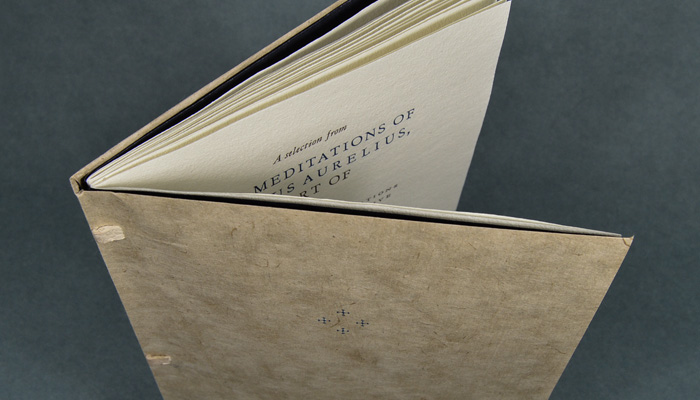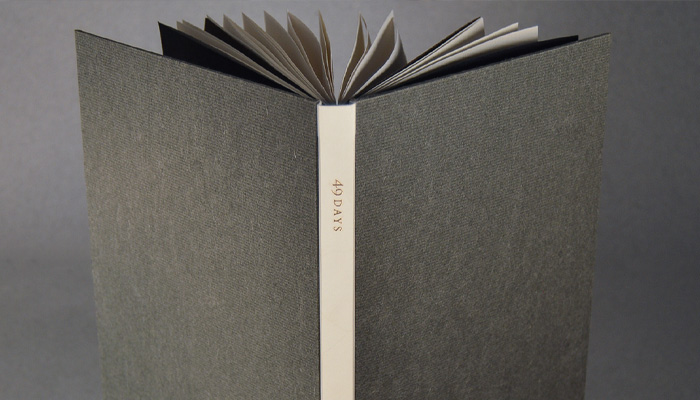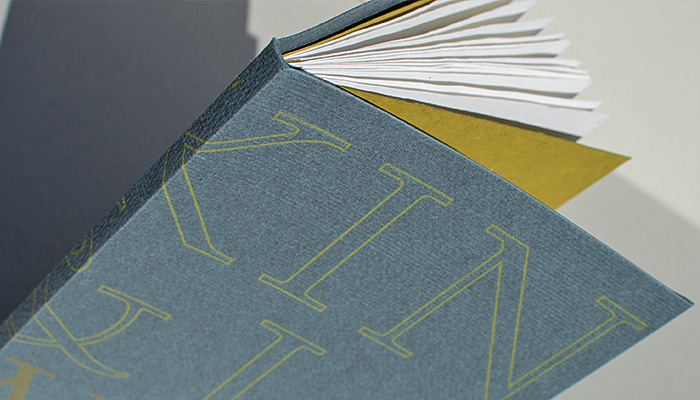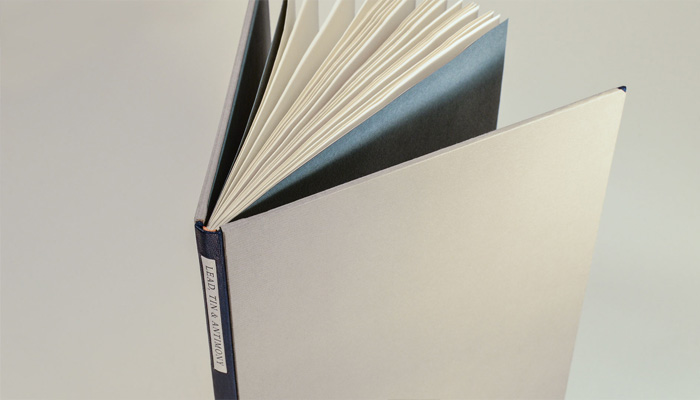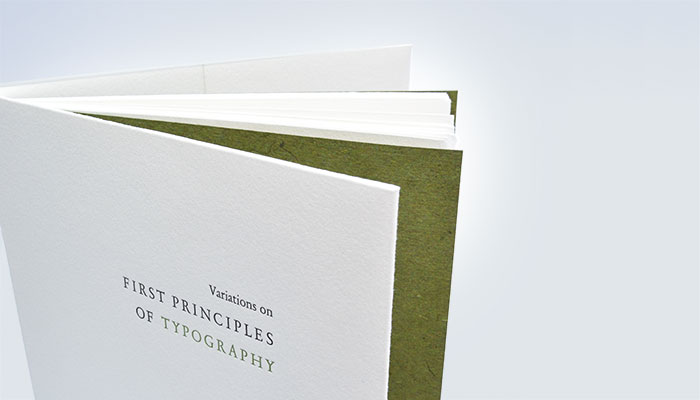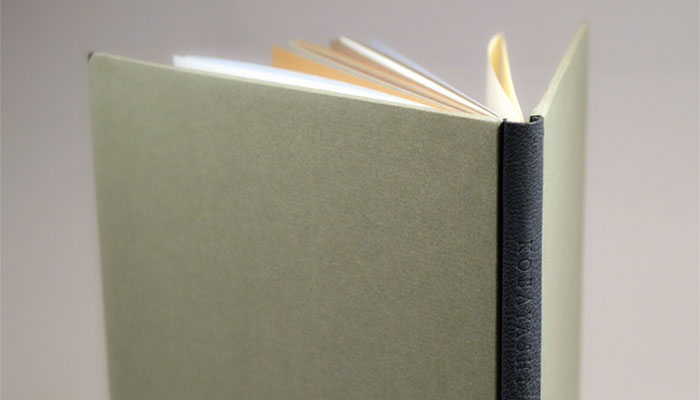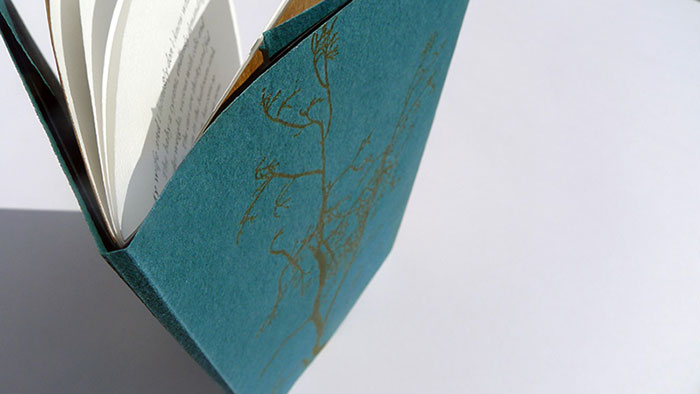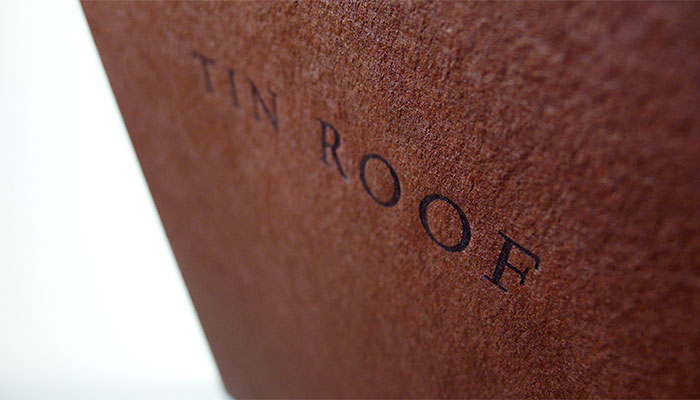
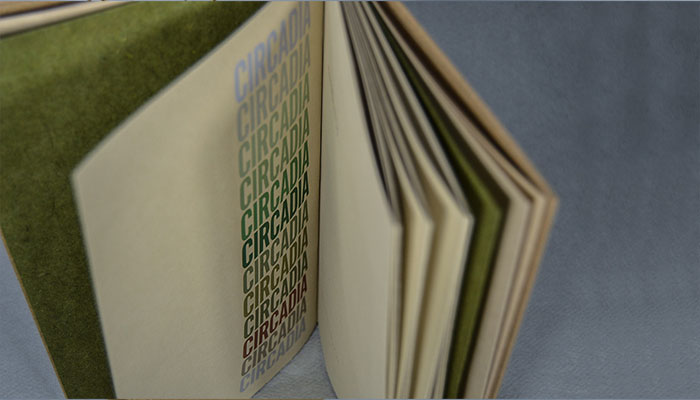
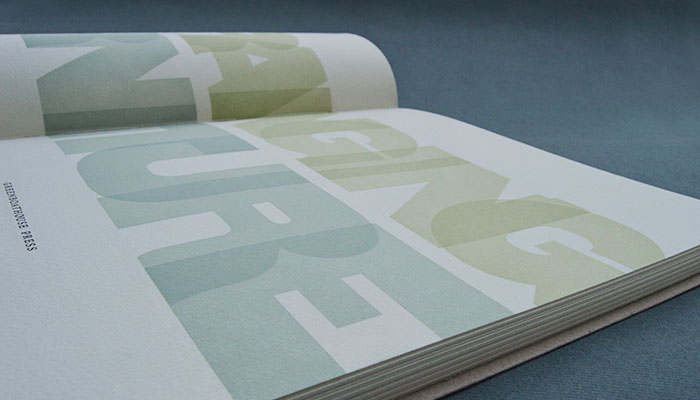
There were two new books for 2012, although one of them has leaked into 2013. The first is a new issue of Stanley Morison's seminal essay First Principles of Typography, details of which can be found below. The second, a new edition of Michael Ondaatje's long poem "Tin Roof," is now ready for release. Please read on...

7.5" × 12.5", 36pp. 2012-13 $400
ISBN:
1-894744-33-1 978-1-894744-33-1
Click image for slideshow...
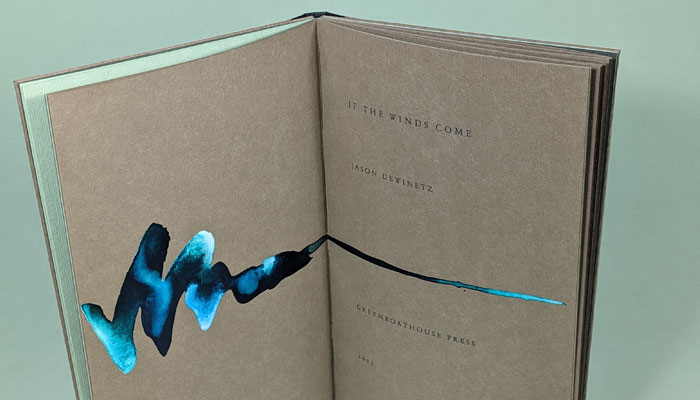
One of Ondaatje’s most personal writings, Tin Roof is an extended meditation, shifting fluidly away from and back into the material world. On the surface it is a diary of escape as a husband hides away in a small tropical cabin, wrestling with the moral complexities of leaving his marriage. But the poem is also an intimate portrayal of a writer struggling to find the precarious balance between the demands and passions of both art and life. An aesthetic tour de force, Tin Roof is an intense and moving submersion into the poetics of “pain, loneliness, deceit and vanity.”
The production of this book was also rather intense and turbulent, making it, without a doubt, the most challenging publication Greenboathouse Press has taken on.
In a way, this project began more than 20 years ago, with my first reading of Ondaatje’s Secular Love, a book that had a major influence both on my own writing and my sense of literary aesthetics. An appreciation for the delicacy and precision of his early work has directly contributed to my interest in, and efforts as a book designer and printer, and, at some point, I knew I’d have to produce an edition of Ondaatje’s writing.
Tin Roof first appeared as a small pamphlet produced in 1982 by the Island Writing Series (Lantzville, BC), now a rather scarce item. It then appeared as the third section of the poetic “novel” Secular Love (Coach House, 1986), eventually landing in Ondaatje’s collection of selected poems The Cinnamon Peeler. This new edition of the poem turned out to be a rather epic adventure into the technical side of fine-press printing, which has made all other Greenboathouse Press projects seem like practice sessions for the real thing. For a rather thorough description of the process, and to see a variety of images related to the technical side of production, please have a look at this page.
Please have a look at this page for details on how to receive a discount on this book by becoming a subscriber.
(International orders, please
for instructions.) |
Hand-set in Jan van Krimpen's Romanée, cast in 1928 and hauled back from Holland in 2011, in two different heights (.928 & .933), and milled, on a modified Ludlow Super-surfacer, to the lower stature. As the elusive Romanée italic was nowhere to be found, the italic here is Monotype Van Dijck, shimmed and underlayed to align with the foundry type. The book was prepared with the assistance of Christina Hebert & Cailtin Voth, and printed on a Vandercook 15-21 at the Greenboathouse Press in Vernon, BC, during the sweltering heat and endless rains of Okangan summer & fall.
The page paper was hand-made for the edition by Reg Lissel in Vancouver, and the wrapper by Cave Paper in Minneapolis. The binding design is by Jason Dewinetz, executed by Alanna Simenson. Held in a slipcase covered with black Japanese silk.
Limited to 65 numbered copies, all signed by the author.
6" × 9.75", 32pp. 2012 $200
ISBN:
1-894744-32-2 978-1-894744-32-4
Click image for slideshow...
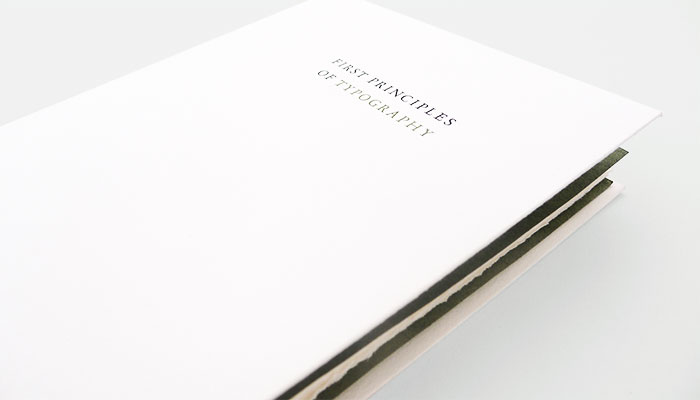
Morison's classic essay on the foundational principles of typographic design first appeared as the entry for "typography" in the 1929 Encyclopedia Britannica, then, in a revised form, in Volume VII of The Fleuron (1930), followed by a variety of editions, each including minor changes, leading to the 1946 Balkema edition from which the text was taken for this edition. Laying out the ground rules in Morison's distinctive upright British, the essay is both an informative, entertaining, and seminal examination of the do's-and-don'ts of proper typesetting and printing.
The original plan for this project was to hand-set the entire book in foundry Romanée (designed by Jan van Krimpen), which is the type that I brought back from Holland last year, and I've been very eager to put it to use. However, on setting the first two test pages, I discovered that the 500lbs of the 14pt size consists of two heights (.928 and .933), and so I'm going to have to mill down the .933 to get all of the 14pt to the same height-to-paper.
Thus, in order to get the season's printing underway, the front and end matter were hand-set in metal (the 12pt & 16pt is all .928), and the body of the book in the 14pt digital revival of Romanée that I designed 2 years ago. The latter was printed from polymer, offering an opportunity to examine both the original metal and the digital revival in close proximity.The book has been printed into handmade Magnani Velatta, hand-sewn and bound into a stiff wrapper of the same stock, the binding executed by Alanna Simenson.
Please have a look at this page for details on how to receive a discount on this book by becoming a subscriber.
(International orders, please
for instructions.) |
The wrapper, half-title, copyright, preface and colophon are set in Jan van Krimpen's foundry Romanée, cast in Haarlem, The Netherlands, by the House of Enschedé in 1928. The 48pt initials are foundry Lutetia, with a single 72pt digital Romanée initial to kick things off. The rest of the book is set in a digital revival of the Romanée types, with the specimen on page 11 in a digital revival of Lutetia, both redrawn and developed into OpenType fonts by Jason Dewinetz. The book was printed into handmade Magnani Velata on a Vandercook 15-21 at the Greenboathouse Press in Vernon, BC. The binding was designed by Jason Dewinetz and executed by Alanna Simenson in Vancouver.
Thanks are due to David McKitterick of Cambridge University, Stanley Morison's executor, for his kind permission to reprint the essay. The text here presented is taken from the 1946 Dutch edition, printed by Joh. Enschedé en Zonen for Balkema-Vijf Ponden Pers-Five Pound Press.
Limited to 50 numbered copies.
6.5" × 10.5", 40pp. 2011 $150
ISBN:
1-894744-31-4 978-1-894744-31-7
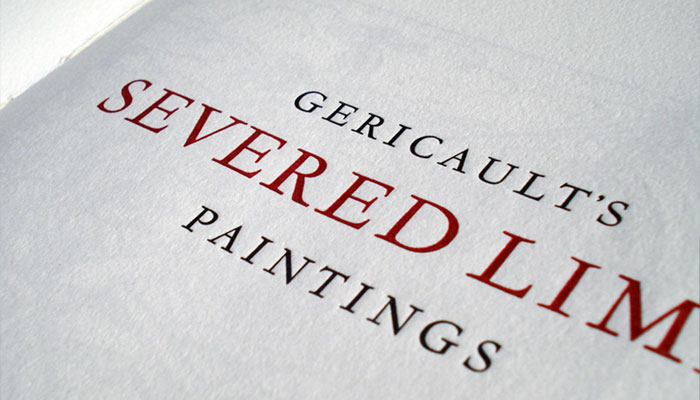
A long poem based on the French Romantic artist Theodore
Géricault and the figural studies leading to his famous painting
"The Raft of the Medusa" of the early 19th century. Blending
and drifting between biographical and historical research on the
painter and the present day narrator's own exploration of the
artist's disturbing process, Dewinetz writes an examination of
intimacy and obsession, working towards an understanding of
the conflict between desire and possession, both of beauty and of
knowledge.
Click image for slideshow...
This new edition includes a variety of extracts from art history texts to provide context for the poem, as well as two line-illustrations printed from polymer, and two full colour reproductions of the paintings produced with an archival Epson printer.
“Dewinetz is a scholar as well as an artist, and the intellectual power of his long poem is as evident and as demanding as its expression is deceptively simple. He is concerned here to demonstrate how critical ideas can help shape and support creative insights, as well as being vivified by them. This extended anecdote of the creative process is a knowledgeable exploration of the sources and shape of knowledge itself.”
Please have a look at this page for details on how to receive a discount on this book by becoming a subscriber.
(International orders, please
for instructions.) |
Historical front matter (pages i–xvi) set in LTC Garamont Text and printed from polymer, all other pages hand-set in Frederic Goudy's Garamont (cast by Jim Rimmer in New Westminster, BC) and printed on a Vandercook 15-21 at the Greenboathouse Press in Vernon, BC.
Pages [i–viii] printed on Zerkall Book Wove, the rest on Arches Johannot. The endsheets are handmade from India, and the wrapper is St Armand from Montréal. French-sewn into a concertina and wrapped in a stiff paper cover, the binding is by Alanna Simenson.
The edition is limited to 50 copies, all signed by the author.
7" × 5", 20pp. 2011 $50
ISBN: 1-894744-30-6 978-1-894744-30-0
Click image for slideshow...
One of the great Canadian poet's last manuscripts, this quirky yet poignant series of 12 poems dances and laughs at the horror of the blank page, exploring through a variety of literary terms (as titles) the ins and outs of pushing through the block.
was, is, well, I don't even know what to write here... Poet and novelist, Governor General's award winning author of The Studhorse Man, Badlands, The Man From the Creeks and, of course, Collected Field Notes, Kroetsch was a figurehead of Canadian writing, not to mention a damn nice guy. If your shelf isn't lined with his books, it should be.
Set by hand in Jim Rimmer's Hannibal Olstyle, Frederic Goudy's Thirty & Garamont, then printed on a Vandercook 15-21 at the Greenboathouse Press in Vernon, BC. The page stock is Zerkall Book Wove with a wrapper of Japanese Cedar Bark. Limited to 55 numbered copies, all signed by the author.
5.875" × 7.75", 80pp. 2010 $300
ISBN:
1-894744-29-2 978-1-894744-29-4
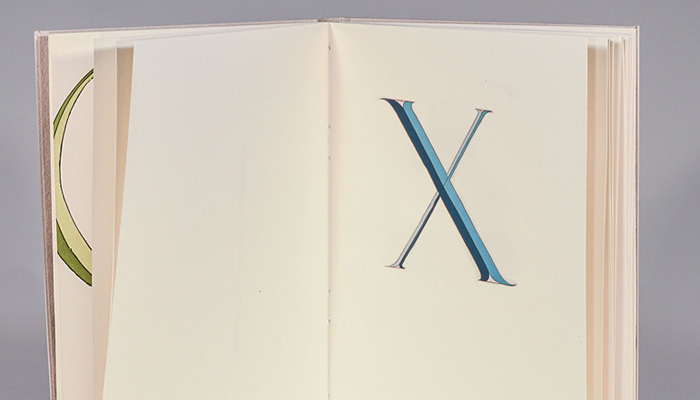
This is a project that's been in the works for over three years: a reproduction of the original drawings of Felice Feliciano's Alphabetum Romanum, an instructional treatise on the correct rendering of Roman capital letters, writtten by Feliciano in c.1460.
I first encountered the drawings in a facimile edition, beautifully produced by the Officina Bodoni (exactly 500 years after the original was created), at a book exhibit at the Buffalo Public Library in 2008. The letterforms simply grabbed me by the throat and I've been unable to catch my breath ever since. As I was, at the time, unable to obtain a copy of the 1960 edition (although I've found one since), I decided simply to publish an edition, if for no other reason than that I would then have a copy myself. From that point began a 2-year process of collecting materials on Feliciano and his alphabet, as well as redrawing his letters from scratch.

A page from the original 1460 manuscript (left), the 1960 Officina Bodoni edition (centre) and a working drawing for the Greenboathouse Press edition (right & below).
Please have a look at this page for details on how to receive a discount this book by becoming a subscriber.
(International orders, please
for instructions.) |
The letterforms are based on the original drawings of Felice Feliciano, c.1460, reproduced by Jason Dewinetz and printed from over 90 polymer plates on a Vandercook 15-21 flatbed cylinder press. The paper is Magnani Biblos, milled in Italy and generously donated by Caryl Peters of the Frog Hollow Press in Victoria, while the cover and endsheets were handmade by Reg Lissel in Vancouver. The text types are ATF Cloister Old Style and Monotype Cloister Italic, designed in 1913 by Morris Fuller Bendon, inspired by the 15th-century types of Nicolas Jenson. The Monotype sorts were generously cast by Jim Rimmer in New Westminster, BC. The type was set, the inks mixed, and pages printed and the book bound during the long, warm days of Okanagan summer. Produced in an edition of 115 copies: 100 numbered copies for sale and 15 ( I - XV ) for private distribution.
While both the original manuscript (held in the collection of the Vatican Library) and the 1960 editions include descriptive passages detailing the construction of the letterforms, I have instead kept the book very simple: the book includes a brief foreword by Paul Gehl (special collections librarian at the Newberry Library in Chicago, and an expert on Renaissance alphabets), and an equally short afterword that I have written detailing the production of the book, printed from hand-set 14pt Cloister Oldstyle. The main body of the book simply showcases the letterforms, one to a spread, printed in 3 colours from polymer plates into Magnani Biblos papers, the same stock used for the 1960 edition. Bound into stiff handmade wrappers (the paper produced by Reg Lissel in Vancouver), the edition is 116 copies, and it appears I'll be binding them for some time to come.
Click image for slideshow...
5.75" × 9.75", 28pp. 2010 $100
ISBN:
1-894744-28-4 978-1-894744-28-7
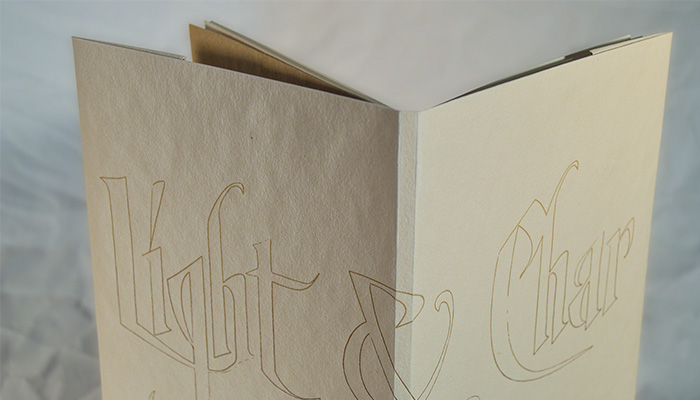
Light & Char is a series of 15 prose poems, each playing within and without the confines of binaristic thinking to explore the productivities stored in the nexuses of, say, yes-no worldviews, right-wrong logics, abstract-concrete divisions, happy-sad categorizations, life-death paradigms. Much of the umph of the poems is derived from a poetic strategy of what-ifs: what if nails were earthworms, what if skyscrapers grew down from the clouds, what if knives could breathe? The title of the collection – as it invokes both illumination and darkness, whiteness and blackness, growth and decay &c. – necessarily places its emphasis on the cobra-like tension of the ampersand.

Please have a look at this page for details on how to receive a discount this book by becoming a subscriber.
(International orders, please
for instructions.) |
Set by hand in Frederic Goudy’s Garamont (cast by Jim Rimmer in New Westminster, BC) and printed on a Vandercook 15-21 at the Greenboathouse Press in Vernon, BC, as May rains give way to warm spring sun. Printed on Magnani Velatta and bound into a stiff paper wrapper handmade by Reg Lissel in Vancouver. The edition is limited to 115 copies: 95 numbered copies for sale, and 20 copies (I-XX) for private distribution, all signed by the author.
3.125" × 4.875", 32pp. 2009 $50
ISBN:
1-894744-25-X 978-1-894744-25-6
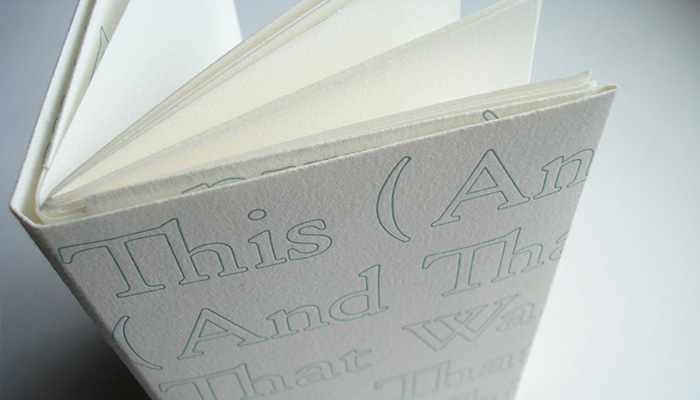
JonArno Lawson's poem And That Was That is reminiscent of Robert
Creeley's early poetry. In terse and playful lines, a speaker
describes a conversation, the subject of which is never stated.
Instead the subject is only described as "this" or "that." The
poem's power lies in the fact that we assume we know what the
conversation is about (it's pretty obvious..."Let's / give this /
another / chance"). Of course, we can all guess, but in the end
the only thing that matters is that the conversation happened.
That lingering ambiguity is what makes the poem.
Photos: Images of the book in production here...

The text is hand-set in 14pt Cloister Old Style, with the same from polymer for the wrapper. Page stock, cover and wrapper are Arches Johannot.
Please have a look at this page for details on how to receive a discount this book by becoming a subscriber.
(International orders, please
for instructions.) |
(International orders, for instructions.) |
6.75" × 9.75", 20pp. 2009 $65
ISBN:
1-894744-26-8 978-1-894744-26-3
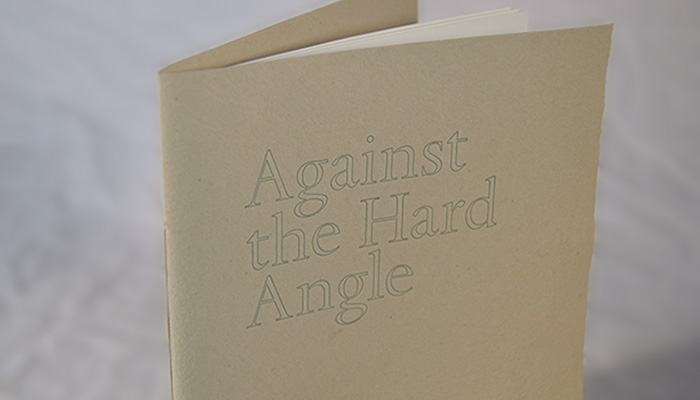
It could be said of Matt Robinson's Against the Hard Angle that
truth bends around its object. The poems are direct but leave the
reader with a sense that something is unspoken. Spoiled milk,
congealed blood from an injury, a workbench. Just when you might
think these poems are parochial, Robinson writes of a delay in an
airport. There is a range of subject-matter and a range of
experience in these poems. And in their understatement, Robinson's
poems feel contemporary. Objects are used to hint at human
relationships, relationships perhaps difficult to discuss, haunted
by an unspoken pessimism. Everything in here is more than it
seems.
Photos: Images of the book in production here...

The text is hand-set in 14pt Spectrum, with display type printed from polymer. Page stock is Magnani Velata, with a wrapper of handmade cotton by Reg Lissel in Vancouver. Text printed letterpress in 2 colours throughout.
Please have a look at this page for details on how to receive a discount this book by becoming a subscriber.
(International orders, please
for instructions.) |
(International orders, for instructions.) |
5.75" × 9.75", 28pp. 2009 $75
ISBN:
1-894744-27-6 978-1-894744-27-0
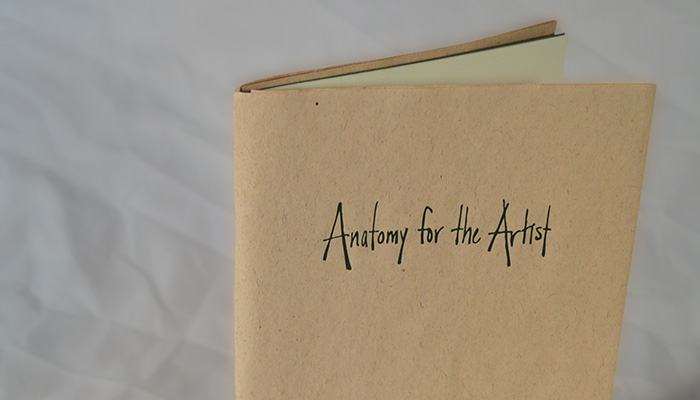
Jessica Hiemstra-van der Horst's Anatomy for the Artist is many
things at once. A suite of poems with accompanying illustrations,
it follows the tradition of ut pictura poesis. As meditations on
the relationship between art and poetry, they are sophisticated and
yet these poems do much more as well. They consider the ingredients
of our lives: phone calls to mothers, a love affair, line-ups,
cooking. The suppleness of bodies, how we imagine them, how we
depict them, how we desire others, how this becomes an art: this
is the meat of Hiemstra-van der Horst's suite.
Photos: Images of the book in production here...

The text is hand-set in 14pt Perpetua with lettering by the artist for display (printed from polymer). The illustrations are giclée prints from an Epson 3800 Pro using pigment-based archival inks. Page stock is Mohawk Superfine, with a flyleaf and wrapper of handmade cotton from India. Text printed letterpress in 2 colours throughout.
Please have a look at this page for details on how to receive a discount this book by becoming a subscriber.
(International orders, please
for instructions.) |
(International orders, for instructions.) |